
Why Scaffold Law Cases Differ From Standard Construction Injury Claims
Published:
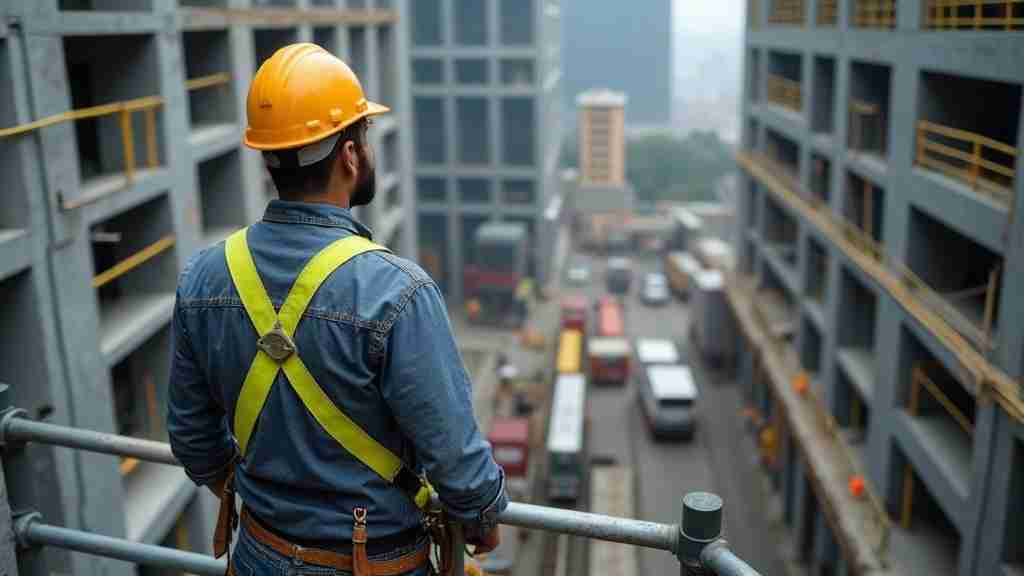
New York’s Scaffold Law, officially Labor Law Section 240, sets construction site cases apart from ordinary negligence claims in one critical way: it can make a property owner or general contractor absolutely liable for certain gravity-related injuries, regardless of whether the injured worker was partly careless. That single distinction changes how evidence is gathered, how liability is argued, and how a claim is valued from day one. Anyone searching for a construction accidents lawyer chicago il or working through a fall-related injury on a New York job site needs to understand why these cases are handled so differently.
Brooklyn’s construction boom, from waterfront condo towers to infrastructure upgrades, means scaffold and fall-related injuries show up constantly in local courts. Knowing how Scaffold Law claims diverge from standard workplace injury cases helps injured workers recognize what’s actually at stake in their situation.
What Makes Scaffold Law Different From a Standard Injury Claim
Most personal injury cases in New York require proving negligence — that someone acted carelessly and that carelessness caused the harm. Labor Law 240(1), the Scaffold Law, works differently. It imposes strict liability on owners and general contractors when a worker is injured due to an elevation-related hazard and proper safety devices weren’t provided or failed.
That means the injured worker doesn’t have to prove the contractor was negligent in the traditional sense. If the right equipment — scaffolding, harnesses, hoists, braces, ladders — wasn’t supplied or didn’t function as required, and that failure caused a fall or a falling-object injury, liability can attach automatically.
The Core Elements of a Scaffold Law Claim
- The injury must involve an elevation-related risk — a fall from a height or being struck by a falling object.
- The accident must occur during construction, demolition, repair, painting, cleaning, or alteration work covered by the statute.
- A safety device required under the law was missing, defective, or inadequate for the task.
- The defendant must be an owner, general contractor, or their agent — not necessarily the worker’s direct employer.
Standard Construction Injury Claims vs. Scaffold Law Cases
Not every construction site injury falls under Labor Law 240(1). A worker who slips on a wet surface at ground level, or trips over debris with no elevation component, typically pursues a standard premises liability or general negligence claim instead. The table below highlights the practical differences.
| Factor | Standard Construction Injury Claim | Scaffold Law (Labor Law 240) Claim |
|---|---|---|
| Burden of proof | Must prove negligence and causation | Strict liability — defective or absent safety device is often enough |
| Comparative fault | Worker’s own carelessness can reduce recovery | Generally does not reduce recovery if a statutory violation caused the fall |
| Type of hazard | Ground-level hazards, debris, equipment malfunction | Elevation-related falls or falling objects |
| Who can be sued | Negligent party directly responsible | Owners and general contractors, even without direct fault |
| Typical injuries | Sprains, fractures, lacerations | Often catastrophic — spinal injuries, traumatic brain injuries, fatalities |
Why Comparative Negligence Rarely Applies
In a typical negligence case, if the injured person is found partly at fault, their compensation gets reduced proportionally under New York’s comparative negligence rules. Scaffold Law largely sidesteps this. Courts have repeatedly held that if a required safety device was absent or failed, the worker’s own momentary inattention usually won’t defeat the claim.
There are exceptions. If a worker is found to be the “sole proximate cause” of their own injury — for example, by ignoring available and functioning safety equipment that was right there for use — liability may shift. That nuance is exactly why early evidence preservation and witness statements matter so much in these cases.
Who Can Be Held Liable Under the Scaffold Law
One of the biggest practical differences is the scope of potential defendants. In a standard workplace injury claim, the worker is often limited to a workers’ compensation claim against their direct employer, with limited options to sue beyond that system.
Scaffold Law claims open the door to lawsuits against:
- The property owner, even if they hired an outside general contractor and weren’t on site.
- The general contractor overseeing the project.
- Construction managers acting with supervisory authority over the work.
- Other agents with the authority to direct, supervise, or control the specific work being performed.
This matters because it allows an injured worker to pursue a personal injury claim against these third parties in addition to collecting workers’ compensation benefits from their employer, often resulting in substantially more complete financial recovery.
Common Scaffold Law Scenarios We See in Brooklyn
Brooklyn’s dense mix of new residential development, commercial renovation, and infrastructure work creates recurring patterns in these claims. Some of the most frequent include:
- Scaffolding collapse or improper erection on multi-story residential builds.
- Ladders that shift, slip, or weren’t secured properly.
- Falls through unguarded floor openings or skylights.
- Falling tools, materials, or debris striking workers below.
- Hoist or lift failures during vertical material transport.
Each of these scenarios can trigger Scaffold Law liability if the right protective equipment wasn’t provided or didn’t work as intended. Determining exactly which statute applies, and against whom, often requires reviewing site safety logs, subcontractor agreements, and inspection records.
Why These Cases Require a Different Investigative Approach
Because liability hinges on the presence, adequacy, and condition of specific safety devices, these cases demand a more technical investigation than a typical slip-and-fall or vehicle collision claim. Evidence that matters includes:
- OSHA citations or site safety violations tied to the project.
- Scaffold inspection and maintenance records.
- Contracts clarifying which entity controlled safety protocols.
- Photographs or video of the equipment before it’s altered or removed.
- Statements from coworkers who witnessed the fall or equipment failure.
Construction sites move fast, and equipment implicated in an accident is sometimes repaired, replaced, or discarded within days. That’s one reason injured workers benefit from getting legal guidance early, before key evidence disappears.
Interplay With Workers’ Compensation
Many injured construction workers assume workers’ compensation is their only option. It’s often just the starting point. Workers’ comp provides medical coverage and partial wage replacement regardless of fault, but it doesn’t compensate for pain and suffering and typically caps wage replacement well below actual lost earnings.
A Scaffold Law claim against a property owner or general contractor is a separate track entirely, pursued alongside — not instead of — a workers’ comp claim. Understanding how these two systems interact, including potential liens on a personal injury settlement, is a key part of resources like our guide to New York construction worker rights.
Why Catastrophic Outcomes Are Common in These Cases
Falls from height and falling-object accidents tend to produce more severe injuries than many other workplace incidents simply because of the forces involved. It’s not unusual for Scaffold Law cases to involve:
- Spinal cord injuries affecting mobility and long-term independence.
- Traumatic brain injuries from head impacts during a fall.
- Amputations involving heavy machinery or crush injuries.
- Multiple fractures requiring extended surgical treatment and rehabilitation.
These injuries often mean months or years of lost income, ongoing medical care, and permanent lifestyle changes — all factors that should be reflected in how a claim is valued, far beyond simple medical bill reimbursement.
Steps to Take After a Construction Site Fall
What happens in the hours and days after a fall can shape the entire claim. General guidance includes:
- Report the incident to a supervisor immediately and insist it’s documented in writing.
- Seek medical attention right away, even if injuries seem minor at first.
- Photograph the scene, the equipment involved, and any visible injuries before conditions change.
- Get names and contact information for coworkers who witnessed the accident.
- Avoid giving recorded statements to an insurance company before speaking with someone who can advise you on your rights.
These steps apply whether the injury ultimately falls under Scaffold Law or a more general workplace injury claim, which is why it helps to understand the broader landscape of construction accident claims and how they’re evaluated.
Why Local Experience With These Claims Matters
Brooklyn’s construction sites operate under New York State labor law, but the practical reality of each case — which contractor controlled the scaffold, which subcontractor supplied the ladder, what the site safety plan actually required — varies project to project. Sorting through overlapping contracts and insurance policies on a busy New York build takes real familiarity with how these jobs are structured and regulated.
That’s the same depth of knowledge that applies broadly across personal injury claims involving serious, work-related harm, where getting the legal framework right from the outset directly affects the outcome.
Moving Forward After a Construction Site Injury
Scaffold Law cases reward careful, early investigation and a clear understanding of which statutes actually apply to the facts. If you’ve been hurt in a fall or falling-object accident on a New York construction site, it’s worth having your situation reviewed by someone familiar with how these claims differ from standard workplace injury cases. Ikhilov & Associates is available to answer questions about your options, and you can also read more about our team on our Google Business profile when you’re ready to learn more about how we work with injured construction workers across Brooklyn.

Keep reading
More from the blog

How to Prevent Workplace Injuries: Why RSI Claims Get Denied in Brooklyn
Learn how to prevent workplace injuries like carpal tunnel and back strain, and why repetitive stress claims are…
Read more
What Are the Main Causes of Pedestrian Accidents in Brooklyn?
What are the main causes of pedestrian accidents in Brooklyn? Learn why left-turn collisions, distracted driving, and poor…
Read more
What Insurance Covers Bicycle Accidents? Proving Brooklyn Dooring Claims
Learn what insurance covers bicycle accidents after a Brooklyn dooring crash, why these claims are so hard to…
Read moreTalk to a lawyer about your case
A case review costs nothing and puts you under no obligation. We work on a contingency fee, so there is no fee unless we recover compensation for you.