
Premises Liability and Slip-and-Fall Settlements in New York
Real recoveries for victims of dangerous property conditions in New York, and the factors that drive premises liability case value.
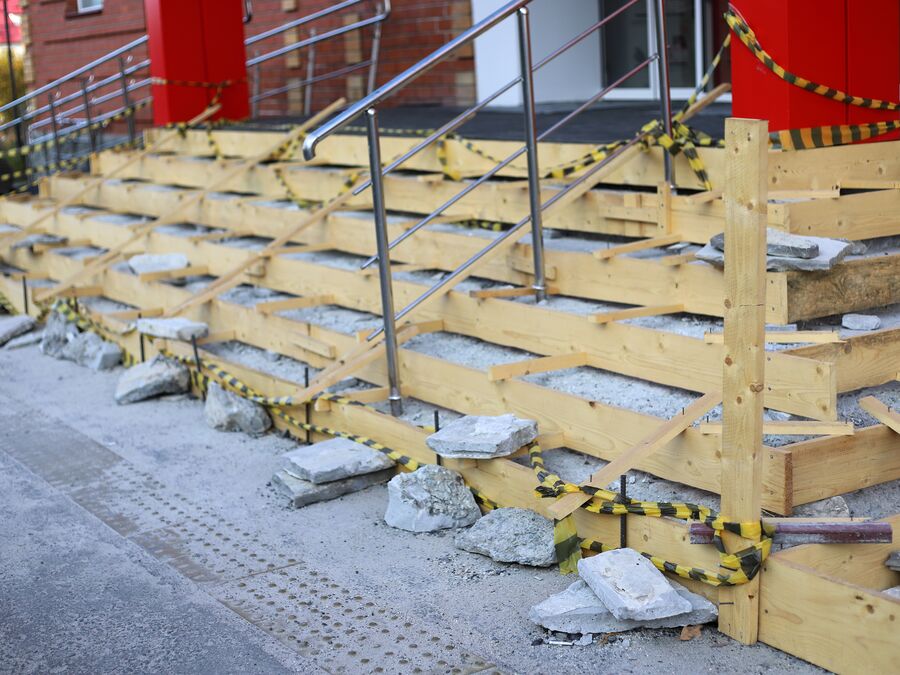
Real Premises Liability Settlements by Ikhilov & Associates
Prior results do not guarantee a similar outcome. Each case is unique and is evaluated on its own facts. The recoveries below reflect specific matters handled by Ikhilov & Associates and are not a prediction of the result in any other case.
The recoveries below come from actual premises liability matters handled by Ikhilov & Associates. They include slip-and-fall, trip-and-fall, and dangerous-condition cases against negligent property owners and landlords.
$2,000,000 Recovery: Slip-and-Fall, Brooklyn
A woman leaving a corner store in Brooklyn encountered a dustpan on the ground. Avoiding it, she stepped into an icy area and slipped. Ikhilov & Associates obtained a $2,000,000 settlement.
$1,800,000 Recovery: Lead-Paint Injuries to Children
Two children experienced brain damage from lead-paint exposure in a rental property. Ikhilov & Associates proved the landlord knew about the hazardous condition and obtained a $1,800,000 settlement for the family.
$1,400,000 Recovery: Trip-and-Fall on Broken Pavement, Queens
A woman from Queens tripped on broken pavement in front of a Dollar Store and fell, injuring her left arm and back. Ikhilov & Associates settled the matter for $1,400,000.
What Drives the Value of a New York Premises Liability Case
- Notice. The owner must have created the dangerous condition or have had actual or constructive notice of it and failed to fix it in a reasonable time. Length of time the hazard existed is often central.
- NYC Administrative Code § 7-210. The duty to maintain most sidewalks, and liability for resulting injuries, shifts from the City to the abutting commercial or larger residential owner. Identifying the correct defendant early is essential.
- Severity of the injury. Hip and wrist fractures, herniated discs, and traumatic brain injuries support larger recoveries than minor injuries.
- Comparative negligence. New York is a comparative-fault state; recovery is reduced (not barred) by your share of fault.
- Documentation. Incident reports, photos of the hazard, prior complaints, building violations, and witness statements all build the notice record.
- Insurance. The property’s general-liability policy limits often define the ceiling on recovery.
Notice and the Property Owner’s Duty
A property owner is liable only when they created a dangerous condition or knew (or should have known) about it and failed to fix it. For Brooklyn brownstones, Bronx apartment buildings, or commercial storefronts across New York City, prior tenant complaints, HPD violations, and surveillance video are often the most powerful evidence of that notice.
Talk to a New York Premises Liability Lawyer
If you were hurt by an unsafe property condition in New York, our premises liability attorneys investigate the cause, identify the right defendants, and prepare every case for trial. There is no fee unless we win. See more case results or contact us for a free consultation.
What is the average slip and fall settlement in New York?
Public records give a sense of the range these claims occupy. The figures below cover personal injury claims for falls on defective sidewalks that were settled with a payment by the City of New York, in the fiscal years when injury claims were recorded separately.
Defective sidewalk personal injury claims settled against the City of New York
- $25,000 median settlement
- $64,514 average settlement
- 46% settled under $25,000
- $155,500 90th percentile
Source: Comptroller Claims Report, NYC Open Data (FY2016, 2017, 2019, n=1,838)
The spread is the useful part. Just under half of these claims settled below $25,000, while one in ten settled above $155,000. What separates them is rarely the fall itself. It is the severity of the injury, the strength of the proof that the owner knew about the condition, and whether the injured person was found partly responsible.
These are claims against the City. A fall in a private building or store involves different parties, different insurance and no notice of claim requirement. The figures illustrate range, and they do not predict any particular case.
What a premises settlement is made of
- Medical treatment, past and projected Falls most often produce fractures of the wrist, hip and ankle. Each can require surgical fixation followed by months of therapy, and hardware sometimes has to be removed later.
- Lost income Time away from work during recovery, and the reduction where an injury prevents returning to the same role.
- Pain and suffering Assessed on the injury and its effect on daily life. Unlike motor vehicle claims, premises cases have no statutory threshold to clear first.
- Care and adaptation Help at home during a period of limited mobility, equipment, and changes to a residence where stairs become difficult.
Because there is no serious injury threshold in a premises case, a claim can proceed on an injury that would not support a motor vehicle claim. The trade off is that liability is harder: the owner’s knowledge of the hazard has to be proven, and it usually is not documented anywhere convenient.
What weakens a fall claim
- No photograph of the condition Repairs happen within days. Without an image taken before the repair, the case rests on description alone, and the defendant describes it differently.
- No proof of how long it had been there Owners are responsible for conditions they knew about or should have found. A hazard that appeared minutes earlier usually does not support a claim.
- An open and obvious condition A defendant will argue a reasonable person would have seen and avoided it. Under CPLR § 1411 this reduces recovery rather than ending it, but the reduction can be substantial.
- A missed deadline against a public body A fall on a city sidewalk, in a park or in public housing requires a written notice of claim, in most cases within ninety days, under General Municipal Law § 50-e. Missing it ends claims that are otherwise sound.
- A delay before treatment A first medical visit days later lets a defendant attribute the injury to something else.
Premises results from our practice
- $2,000,000 For a Brooklyn woman who slipped on ice outside a corner store while avoiding a dustpan left on the ground, injuring a knee that later required surgery.
- $1,800,000 For two children with brain damage from lead paint poisoning, after proving the landlord ignored the hazard.
- $1,400,000 For a Queens woman who tripped on broken pavement outside a store, injuring her arm and back.
More on the case results page.
Prior results do not guarantee a similar outcome. Every case is evaluated on its own facts.
New York law
The statutes that apply to this kind of claim
Each provision below links to its official text published by the New York State Senate. How a statute applies depends on the facts of a specific case.
Three year limit on personal injury actions
Most personal injury cases in New York must be filed within three years of the date of the injury. Several situations change that period, including claims against a public agency and claims on behalf of a child.
Comparative fault
Being partly at fault does not end a claim in New York. Compensation is reduced in proportion to the share of fault assigned to the injured person.
Notice of claim against a public body
This applies when the claim is against a public body: the City, a public housing authority, a public hospital or a school district. Those claims require a written notice of claim, in most cases within ninety days of the incident. A fall on private property, in a store or an apartment building, follows the ordinary rules instead.
This summary is general information about New York law, not legal advice about your situation. Deadlines have exceptions, and some of them are short. Speak with an attorney about the facts of your case.
Common questions
FAQs about Premises Liability and Slip-and-Fall Settlements in New York
All questionsWho is responsible if I slip on a New York City sidewalk?
Under NYC Administrative Code § 7-210, the owner of the abutting commercial or larger residential property is generally responsible for maintaining the sidewalk and for injuries caused by defects, rather than the City.
What do I have to prove in a slip-and-fall case in New York?
That a dangerous condition existed and the property owner either created it or had actual or constructive notice of it and failed to fix it within a reasonable time. Evidence of how long the hazard existed is often central.
What if I was partly at fault for my fall?
New York follows comparative negligence, so you can still recover even if you were partly at fault. Your compensation is reduced by your percentage of responsibility.

Reviewed by
Erik Ikhilov, Esq.
Founding Partner & Personal Injury Attorney, Ikhilov & Associates
Founding partner of Ikhilov & Associates and New York personal injury attorney. Admitted to practice in New York, registration number 2550754.
Full biographyTalk to a lawyer about your case
A case review costs nothing and puts you under no obligation. We work on a contingency fee, so there is no fee unless we recover compensation for you.