
Queens Pedestrian Accident Lawyer for Injured Walkers
Queens Boulevard and busy crossings put pedestrians at risk every day. When a driver hits you, we fight for full recovery.
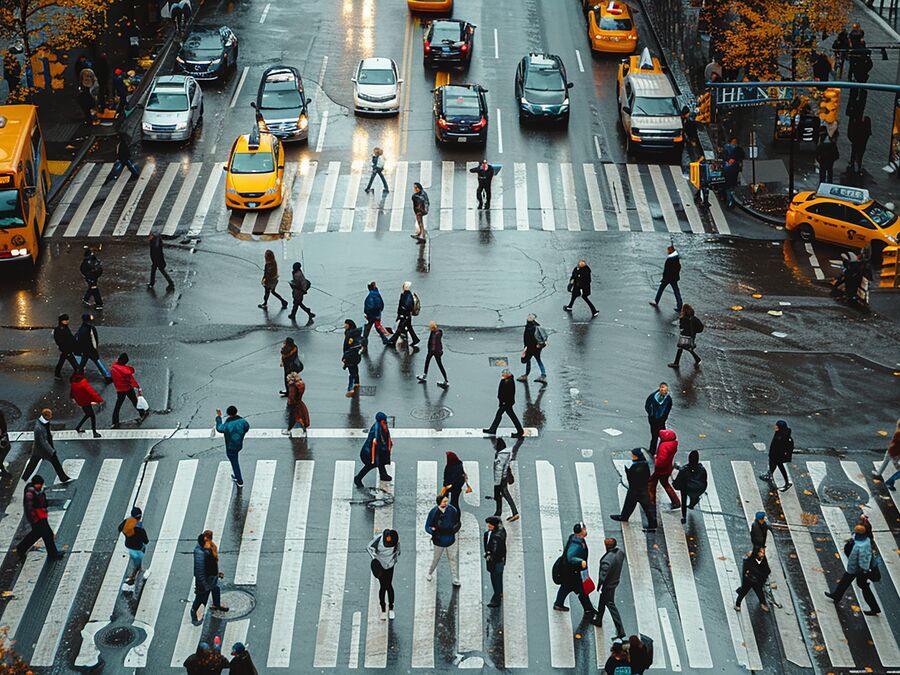
Pedestrian Injuries on Queens Streets
Queens has some of the most dangerous corridors in the city, including Queens Boulevard, long nicknamed the “Boulevard of Death,” along with Northern Boulevard and Roosevelt Avenue. Pedestrians struck by vehicles suffer severe injuries because they have no protection. Our pedestrian accident attorneys fight for injured walkers across Queens.
Right of Way and Driver Negligence
New York’s Vehicle and Traffic Law gives pedestrians the right of way in crosswalks, and New York City’s Right of Way Law adds further protection. Drivers who fail to yield, speed, turn without looking, or run a signal are negligent. We use traffic-camera footage, police reports, and witness accounts to prove exactly how the driver caused the crash.
No-Fault Benefits for Pedestrians
Even as a pedestrian, you are typically entitled to no-fault benefits from the insurance of the vehicle that struck you, covering initial medical care and lost earnings. If your injury is serious under Insurance Law § 5102(d), you can also pursue the driver for pain and suffering. If the driver fled, uninsured-motorist coverage may apply.
Catastrophic Pedestrian Injuries We Handle
With nothing to shield them, struck pedestrians often suffer the most severe injuries we see: traumatic brain injuries, spinal cord damage, multiple fractures, internal injuries, and fatal trauma. These cases require careful medical documentation and life-care planning to capture decades of future cost. When a pedestrian is killed, we pursue a wrongful death claim so the family is not left with the financial burden of a driver’s negligence.
Free Consultation With a Queens Pedestrian Accident Lawyer
We handle the insurers and prepare your case for trial in Queens County. There is no fee unless we win. Contact us today.
Why pedestrians are struck in Queens
Queens, 2025
- 17,950 reported crashes
- 9,498 people injured
- 2,055 pedestrians injured
- 943 cyclists injured
Queens has the widest arterial roads in the city, and the crossings on them are long. Queens Boulevard, Northern Boulevard, Woodhaven Boulevard and the service roads along the Long Island Expressway put people on foot in traffic designed for speed.
- Crossings too long for one signal A person still in the roadway when the signal changes is exposed in the middle of the crossing, and drivers arriving on green are not expecting them.
- Service road and main road merges Drivers moving between the expressway service roads and local streets are watching for gaps in traffic rather than for pedestrians.
- Turns onto wide avenues A vehicle turning from a side street accelerates to match traffic and crosses the crosswalk while doing so.
- Poor lighting on long blocks Between intersections on the larger boulevards, visibility drops sharply after dark, and this is where the driver most often claims not to have seen anyone.
A driver’s duty of care toward pedestrians is set out in VTL § 1146, and it applies on top of the specific rules about signals and right of way.
What to do after a pedestrian accident in Queens
- Stay where you are and let the police document it Moving out of the roadway is sometimes necessary, but the position of the vehicle and any debris tells the story of the impact.
- Get examined the same day Injuries that seem minor at the scene, particularly to the head, knees and shoulders, frequently develop over the following days.
- Claim no-fault benefits from the vehicle’s insurer A pedestrian claims these from the insurance on the vehicle that struck them. The application deadline is short and separate from any lawsuit.
- Identify cameras before the footage is lost Businesses along the boulevards, residential buildings and buses in the area may all hold recordings, and most systems overwrite within days.
- Write down what you remember while it is fresh Signal colour, where you were in the crossing, what you heard. Memory of a sudden event fades quickly and unevenly.
What a Queens pedestrian claim can cover
- Medical care, present and future Including surgery, rehabilitation and long term treatment where an injury does not fully resolve.
- Lost earnings and reduced earning capacity No-fault covers part of lost wages up to its limits. A claim against the driver reaches the rest.
- Pain and suffering Available where the injury meets the statutory definition of serious injury in Insurance Law § 5102(d), which includes a fracture, significant disfigurement and permanent loss of use.
- Care and assistance at home Where the injury leaves someone unable to manage daily tasks during recovery.
Pedestrians struck in Queens are often accused of crossing outside a crosswalk. Under CPLR § 1411 that does not end a claim. It reduces recovery in proportion to the fault assigned, and the assessment is made on the specific facts.
Deadlines in a Queens pedestrian claim
Pedestrian cases carry an extra deadline that drivers do not face, because a large share of the vehicles on Queens streets belong to public agencies. Which clock applies depends on what struck you.
- Thirty days for no-fault benefits Claimed from the insurer of the vehicle that struck you, not from your own policy. This is the shortest of the deadlines and the one missed most often, because people assume a pedestrian has nothing to file.
- Ninety days if a public vehicle was involved An MTA bus, a sanitation truck, a school bus under contract or a city vehicle brings the notice of claim requirement in General Municipal Law § 50-e. Claims against the transit authority have their own rules under Public Authorities Law § 1212.
- Three years for a lawsuit against a private driver The general limit under CPLR § 214, running from the date of the crash.
- Two years when the crash causes a death Running from the date of death rather than the date of the crash, under EPTL § 5-4.1.
A child injured as a pedestrian is treated differently, and the time limits work differently as a result. Do not assume a claim from years ago is closed without asking.
How we handle a Queens pedestrian case
Pedestrian cases are contested on a narrow point far more often than car cases: whether the person on foot did something to contribute. The work is mostly about removing that argument before it settles into the file.
- The signal timing is established, not assumed On the wide Queens boulevards, crossing times and signal phases are documented facts. They frequently show that a pedestrian described as crossing late was still within the interval the crossing allows.
- Footage is chased in the first week Businesses along the boulevards, residential buildings and buses hold recordings on short retention cycles. Written preservation requests go out immediately.
- The vehicle is identified fully A commercial or public vehicle changes both the deadline and the available coverage, and that is established before anything is filed.
- The injury is documented for the threshold Whether a claim can go beyond no-fault turns on the serious injury definition in Insurance Law § 5102(d), so treatment records are reviewed against it from the start.
The case review is free, and we work on a contingency fee with expenses advanced by the firm. There is no fee unless the case produces a recovery.
New York law
The statutes that apply to this kind of claim
Each provision below links to its official text published by the New York State Senate. How a statute applies depends on the facts of a specific case.
Drivers must exercise due care
Drivers have a duty of care toward pedestrians and cyclists on the roadway, on top of the specific rules on right of way and signals.
Definition of serious injury
To sue for pain and suffering after most motor vehicle crashes, an injury has to meet the statutory definition of serious injury. The list includes a fracture, significant disfigurement, permanent loss of use of a body organ or member, and significant limitation of use of a body function or system.
Three year limit on personal injury actions
Most personal injury cases in New York must be filed within three years of the date of the injury. Several situations change that period, including claims against a public agency and claims on behalf of a child.
Comparative fault
Being partly at fault does not end a claim in New York. Compensation is reduced in proportion to the share of fault assigned to the injured person.
This summary is general information about New York law, not legal advice about your situation. Deadlines have exceptions, and some of them are short. Speak with an attorney about the facts of your case.
I was hit by a car while walking in Queens. Whose insurance pays my medical bills?
Generally the no-fault coverage of the vehicle that struck you pays initial medical bills and partial lost wages, even though you were on foot. A serious injury also lets you pursue the driver for pain and suffering.
What if the driver who hit me drove away?
If the driver fled, uninsured-motorist (UM) coverage, including your own or a household policy, may provide compensation. Report the hit-and-run to police promptly to protect the claim.
Does it matter if I was crossing outside a crosswalk?
You may still recover. New York’s comparative negligence rule reduces but does not eliminate compensation if you were partly at fault, and the driver still has a duty to avoid hitting pedestrians.

Reviewed by
Erik Ikhilov, Esq.
Founding Partner & Personal Injury Attorney, Ikhilov & Associates
Founding partner of Ikhilov & Associates and New York personal injury attorney. Admitted to practice in New York, registration number 2550754.
Full biographyTalk to a lawyer about your case in Queens
A case review costs nothing and puts you under no obligation. We work on a contingency fee, so there is no fee unless we recover compensation for you.