
Queens Construction Accident Lawyer for Injured Workers
From Long Island City towers to roadwork on the LIE, we fight for Queens construction workers hurt on the job.
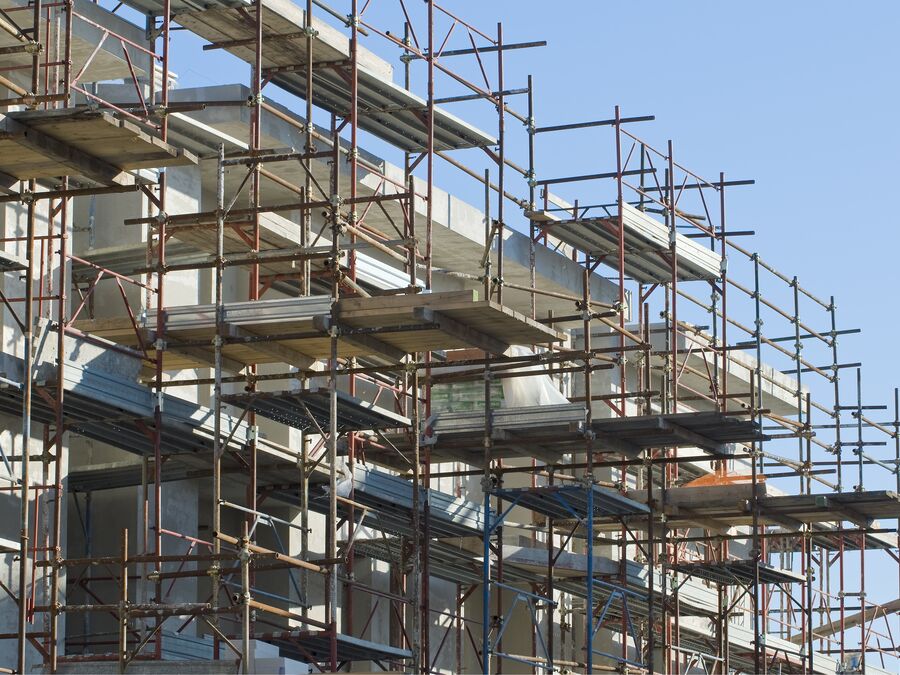
Protecting Queens Construction Workers
Queens is in the middle of a building boom, from the high-rises of Long Island City to development across Flushing, Astoria, and Jamaica, plus constant roadwork on the Long Island Expressway and Grand Central Parkway. That activity comes with serious risk. Our construction accident lawyers represent Queens workers injured in falls, collapses, crane and equipment failures, and trench accidents.
How New York Labor Law Strengthens Your Claim
Labor Law § 240(1) imposes strict liability on owners and general contractors for height-related injuries, falls from scaffolds or ladders and falling objects, while § 241(6) ties liability to violations of specific Industrial Code rules and § 200 covers general site safety. These laws frequently support a lawsuit against the owner and general contractor on top of any workers’ compensation claim.
Recovering More Than Workers’ Compensation
Comp pays a portion of lost wages and medical bills, but nothing for pain and suffering or your full future losses. A third-party claim can. We document the scene, secure OSHA findings and safety records, and pursue the negligent parties whose choices caused your injury.
Why Acting Quickly Protects Your Queens Claim
Construction sites change fast. Scaffolds come down, equipment is repaired or removed, and witnesses move on to other jobs. The sooner we are involved, the sooner we can photograph conditions, secure OSHA reports and safety meeting records, and obtain accident reports before they disappear. Early action also lets us file the workers’ compensation claim correctly while preserving the separate third-party lawsuit, two tracks that must be coordinated to protect your full recovery.
Talk to a Queens Construction Accident Lawyer
We manage the comp lien and the litigation, and prepare every matter for trial in Queens County. There is no fee unless we recover for you. Contact us today.
Deadlines that decide whether a Queens claim survives
Construction cases have more overlapping deadlines than most, because a workers compensation claim, a third party case and sometimes a claim against a public owner all run at once.
- Thirty days to notify your employer Written notice of a workplace injury goes to the employer under the workers compensation system. Late notice is one of the most common reasons a compensation claim is contested.
- Two years to file the compensation claim Separate from notifying the employer, and separate again from any lawsuit.
- Ninety days if the site belongs to a public owner School construction, transit work and city building projects bring the notice of claim requirement in General Municipal Law § 50-e. This is the deadline that most often ends an otherwise strong Queens case.
- Three years for the third party lawsuit The general limit under CPLR § 214, running from the date of the accident.
Whether an owner counts as public is not always obvious from the site. A private developer building for a public authority can bring the shorter deadline into play, and that is worth checking within the first weeks rather than the first year.
Who can be held responsible on a Queens construction site
A single site can involve a property owner, a developer, a general contractor, several subcontractors, a scaffold company and an equipment supplier. Your own employer is generally protected from suit under Workers Compensation Law § 11. The others are not.
- Owners and general contractors For elevation related risks such as falls from height and falling objects, Labor Law § 240 places responsibility on them, and it does not depend on the worker having been careful.
- Whoever broke a specific safety rule Labor Law § 241(6) requires compliance with the Industrial Code. A claim under it rests on identifying the particular provision that was violated.
- Whoever controlled the work or created the hazard The general duty in Labor Law § 200 usually reaches the party that directed the work or made the condition.
- Manufacturers and suppliers Where a lift, saw, hoist or harness failed, the claim may run against the company that made or maintained it.
Construction incidents in Queens by the numbers
Queens construction incidents, 2025
- 56 reported incidents
- 45 workers injured
- 4 workers killed
- 24 incidents where a worker fell
Two things stand out in those figures. Queens recorded more construction deaths in 2025 than any other borough, including boroughs with twice the number of reported incidents. And falls account for close to half of everything reported.
That second figure is the reason Labor Law § 240 matters as much as it does. The section places responsibility for elevation related risks on owners and contractors, and it does not depend on the worker having been careful. A fall from a scaffold, a ladder or through an unguarded opening falls squarely within it.
What to do after a construction accident in Queens
Two claims usually run in parallel after a site injury, and each has its own requirements. Workers compensation covers treatment and part of lost wages through your employer. A separate case against the owner or general contractor covers what compensation does not.
- Report the injury in writing, and keep a copy Written notice to the employer is required for the compensation claim and has its own deadline. A copy in your own hands prevents a later dispute about whether it was given.
- Do not sign anything you have not read Forms presented on site in the days after an injury sometimes include statements about how it happened. If a form is in a language you do not read comfortably, ask for time and a translation.
- Get treated and keep going Attendance records support both claims. Where a wait for authorisation interrupts treatment, ask the provider to note the reason.
- Record the site, not only the injury Photograph the scaffold, the opening, the ladder or the machine, and the safety equipment that was or was not provided. Sites change within days.
- Collect names before crews move on Subcontractor crews rotate between sites. A name and a phone number taken on the day is far easier than tracing someone months later.
New York’s Labor Law protections and the workers compensation system are not conditioned on immigration status. An injured worker’s right to bring these claims does not depend on it.
What a Queens construction claim can cover
Workers compensation pays a defined portion of lost wages up to a statutory maximum, and it does not pay for pain and suffering at all. For a worker whose earnings included regular overtime, the gap between the benefit and the actual loss becomes obvious within a few months.
A claim against a party other than your employer looks at the whole loss over time:
- Future medical care, not only past bills A serious spinal or orthopaedic injury often means further surgery, ongoing therapy and equipment that needs replacing. These are valued forward, with medical opinion behind the figures.
- The earnings you would have had Calculated on your actual pattern of work, including overtime and the progression the trade would normally have offered, rather than on a base rate.
- Being unable to return to the trade Where an injury rules out physical work permanently, the loss is the difference between that trade and whatever work remains available.
- Pain and suffering Available in this claim and not through workers compensation. Assessed on the specific injury and its effect on daily life.
- Household help and adaptation Assistance with tasks you can no longer perform, and changes to a home where mobility is affected.
Because your employer is generally protected from suit under Workers Compensation Law § 11, this part of the recovery depends on identifying the other parties on the site who carried a legal duty toward you.
How we work with injured Queens workers
- The compensation claim is protected first It is the income arriving while everything else is pending. Steps taken in the third party case should not put it at risk, and the two have to be coordinated rather than run separately.
- The site is documented before it changes Scaffolds come down and openings get covered. Inspection records, permits and DOB filings are requested early, while they still describe the site as it was.
- Every contractor on the job is identified Ownership, the general contractor and the chain of subcontractors decide who can be held responsible and which insurance policies apply.
- Nothing is billed to you while it runs We work on a contingency fee and advance the case expenses, including expert inspections and reports. There is no fee unless the case produces a recovery.
If English is not the language you are most comfortable in, say so at the first call. Details about how an accident happened get lost when a worker is describing it in a second language under pressure.
Why accidents happen on Queens sites
Queens carries a large share of the city’s mid rise residential construction along with transit and airport work, and the accident patterns follow the type of site.
- Falls from height Scaffolds without proper planking, unsecured ladders, unguarded floor openings and missing perimeter protection.
- Objects falling on workers below Materials hoisted without securing, and debris where no overhead protection was installed.
- Trench and excavation collapse Federal excavation standards set out shoring and sloping requirements. See the OSHA construction standards.
- Electrical contact Live circuits that were never locked out, and contact with overhead lines while moving equipment.
- Struck by vehicles and machinery Reversing trucks and swinging loads on sites shared with active traffic.
New York law
The statutes that apply to this kind of claim
Each provision below links to its official text published by the New York State Senate. How a statute applies depends on the facts of a specific case.
Scaffold Law
Places responsibility on owners and contractors for elevation related risks such as falls from height and falling objects. Liability under this section does not depend on the worker having been careful.
Construction, excavation and demolition safety
Requires owners and contractors to follow the specific safety rules in the Industrial Code. A claim under this section rests on identifying the particular rule that was broken.
General duty to provide a safe workplace
The general safety duty owed at a worksite. It usually applies where the party being sued controlled the work or created the hazardous condition.
Workers compensation as exclusive remedy
An injured employee generally cannot sue their own employer. That bar does not extend to other parties on the site, such as a property owner, a general contractor or an equipment supplier.
Three year limit on personal injury actions
Most personal injury cases in New York must be filed within three years of the date of the injury. Several situations change that period, including claims against a public agency and claims on behalf of a child.
This summary is general information about New York law, not legal advice about your situation. Deadlines have exceptions, and some of them are short. Speak with an attorney about the facts of your case.
I get workers’ comp for a Queens site injury. Can I still sue?
Yes. A third-party lawsuit against a negligent owner, contractor, or manufacturer is separate from comp and can recover pain and suffering and full lost earnings that comp will not pay.
What if I am an undocumented worker?
New York’s Labor Law protections and personal injury rights apply regardless of immigration status. You can pursue a claim, and your status is not a defense to a negligent contractor or owner.
What are the most common Queens construction injuries we see?
Falls from heights, scaffold and ladder collapses, falling objects, crane and hoist failures, electrocutions, and trench cave-ins are among the most frequent and serious.

Reviewed by
Erik Ikhilov, Esq.
Founding Partner & Personal Injury Attorney, Ikhilov & Associates
Founding partner of Ikhilov & Associates and New York personal injury attorney. Admitted to practice in New York, registration number 2550754.
Full biographyTalk to a lawyer about your case in Queens
A case review costs nothing and puts you under no obligation. We work on a contingency fee, so there is no fee unless we recover compensation for you.