
What Causes Truck Accidents in Brooklyn, NY? Key Risk Factors Explained
Published:
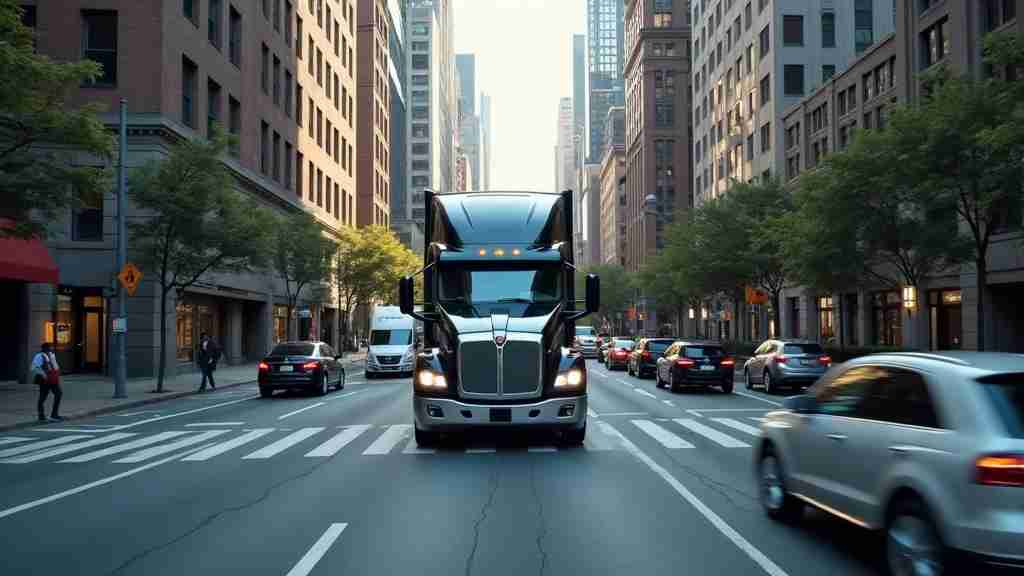
Truck accidents happen most often because of driver fatigue, distracted driving, poor vehicle maintenance, improper cargo loading, speeding, and driver inexperience — and on Brooklyn’s dense, truck-heavy corridors like the BQE, Third Avenue, and the approaches to the bridges and tunnels, these risk factors are amplified by heavy traffic, tight turns, and constant stop-and-go conditions. Understanding what causes truck accidents matters because the answer usually points directly to who is legally responsible for the crash — the driver, the trucking company, a cargo loader, or even a parts manufacturer.
Trucks weighing up to 80,000 pounds don’t behave like passenger cars, and when something goes wrong, the results are often catastrophic. Below, we break down the leading causes, what happens to drivers after a crash, how frequently these collisions occur, and what to look for if you ever need to hire a lawyer to handle one.
What Causes Truck Accidents?
Large truck crashes are rarely caused by a single mistake. Federal and state crash investigations typically point to a combination of human error, mechanical failure, and company pressure. Here are the most common contributing factors.
Driver Fatigue
Federal Hours of Service rules limit how long truckers can drive without rest, but fatigue remains one of the most frequently cited causes of serious truck crashes. Drivers under pressure to meet tight delivery windows sometimes push past legal limits or falsify logs. A fatigued driver reacts slower, misjudges distances, and can drift out of a lane or fail to brake in time.
Distracted Driving
Cell phones, GPS units, dispatch tablets, and even eating behind the wheel all pull attention away from the road. Given how long truckers spend driving each day, even a few seconds of distraction at highway speed can turn into a catastrophic rear-end or lane-change collision.
Speeding and Aggressive Driving
A fully loaded tractor-trailer needs significantly more distance to stop than a passenger vehicle. Speeding reduces that margin even further, and it’s especially dangerous on Brooklyn streets with frequent lights, pedestrians, and cyclists.
Improper Cargo Loading
Overloaded trailers, unevenly distributed weight, or poorly secured freight can cause a truck to tip, jackknife, or spill its load onto the roadway. Loading errors are often the fault of a shipping or logistics company rather than the driver.
Poor Vehicle Maintenance
Worn brakes, bald tires, faulty lights, and neglected mechanical inspections all increase crash risk. Trucking companies are required to maintain their fleets, and skipped maintenance can shift liability onto the company itself.
Driver Inexperience or Inadequate Training
Maneuvering an 18-wheeler through narrow city streets, tight turns, and heavy traffic requires specialized skill. Drivers who are new to commercial vehicles, or who aren’t familiar with Brooklyn’s traffic patterns, are more prone to misjudging turns, blind spots, and stopping distances.
Blind Spots
Large trucks have substantial blind spots on all four sides — commonly called “no-zones.” Cyclists, pedestrians, and smaller vehicles are especially vulnerable when a truck turns or changes lanes without noticing them.
Weather and Road Conditions
Rain, snow, and ice reduce traction and visibility. Combined with the sheer size of a commercial truck, adverse weather significantly raises the odds of a jackknife or multi-vehicle pileup.
Drug and Alcohol Use
Though commercial drivers face strict testing requirements, substance use — including impairment from prescription medications — still contributes to a portion of serious truck crashes each year.
How Many Truck Accidents Happen Per Year?
Large truck crashes number in the hundreds of thousands annually across the United States, with thousands of those crashes resulting in fatalities and many more causing serious injury. New York City’s mix of highways, bridge approaches, and narrow commercial corridors means Brooklyn sees a steady share of these collisions, particularly involving delivery trucks, tractor-trailers on the BQE, and municipal or construction vehicles working near job sites.
Because so many trucks pass through or make deliveries within the borough every day, even a small percentage of crashes translates into a meaningful number of serious injuries each year for Brooklyn residents, drivers, cyclists, and pedestrians.
Do Truck Drivers Get Fired for Accidents?
It depends on the circumstances, the company’s policies, and what an internal or regulatory investigation finds. Here’s generally how it plays out:
- Clear driver fault (fatigue, intoxication, reckless driving): Termination is common, especially if the company faces liability exposure or the driver violated federal safety regulations.
- Mechanical failure or company-caused issue: The driver may keep their job if the crash resulted from a maintenance failure or scheduling pressure imposed by the employer.
- Minor incidents with no injury: Some companies issue warnings or retraining rather than termination, particularly for a driver with an otherwise clean record.
- Repeat violations: Drivers with a pattern of unsafe behavior are far more likely to be let go, since repeated violations increase a company’s insurance costs and legal risk.
This matters for injury victims because a driver’s employment history, disciplinary record, and prior violations can become important evidence in a claim. If a trucking company knew a driver had a history of unsafe behavior and kept them on the road anyway, that can support a claim of negligent hiring or supervision against the company itself, not just the driver.
Who Can Be Held Responsible?
Truck accident liability is often more complicated than a typical car crash because multiple parties may share responsibility. Identifying every liable party is critical to recovering full compensation.
| Potentially Liable Party | Common Basis for Liability |
|---|---|
| Truck driver | Speeding, distraction, fatigue, impairment, reckless maneuvers |
| Trucking company | Negligent hiring, inadequate training, unrealistic delivery schedules, skipped maintenance |
| Cargo loading company | Improperly secured or overloaded freight |
| Truck or parts manufacturer | Defective brakes, tires, or mechanical components |
| Maintenance contractor | Failure to properly inspect or repair the vehicle |
Because federal trucking regulations, electronic logging data, and company records are all part of a thorough investigation, these cases typically require more resources and specialized knowledge than a standard car accident claim. Our truck accident team routinely digs into black box data, driver logs, and maintenance records to identify every party who contributed to a crash.
Common Injuries in Truck Accidents
Given the size and weight difference between a commercial truck and almost any other vehicle on the road, injuries tend to be severe. Common outcomes include:
- Traumatic brain injuries
- Spinal cord injuries
- Severe burns, particularly in crashes involving fuel or cargo fires
- Amputations and loss of limbs
- Multiple fractures, internal injuries, and long-term disability
In the most severe cases, families are left dealing with a wrongful death claim rather than a recovery. Because of the scale of these injuries, medical costs and long-term care needs are often far higher than in an ordinary car accident, which makes accurately valuing a claim especially important.
Finding the Best Lawyer for a Truck Accident Case
Not every personal injury lawyer regularly handles commercial trucking cases, and the differences matter. When evaluating who to trust with a truck accident claim, look for:
- Experience specifically with commercial trucking regulations — Federal Motor Carrier Safety Administration rules are distinct from ordinary traffic law.
- Ability to move quickly on evidence preservation — electronic logging data, dash cam footage, and black box recordings can be overwritten or destroyed if not requested promptly.
- A track record of investigating trucking companies, not just individual drivers, since company negligence is often where the larger liability lies.
- Resources to go up against corporate insurers, who typically send rapid-response teams to the scene of serious truck crashes to protect the company’s interests.
A truck accident lawyer who understands both the mechanical and regulatory side of these cases is far better positioned to identify every avenue of compensation, from the driver’s insurance to the trucking company’s commercial policy.
What To Do After a Truck Accident in Brooklyn
If you’re ever involved in a collision with a commercial truck, a few early steps can protect both your health and your legal options:
- Call 911 and seek medical attention, even if injuries seem minor at first.
- Photograph the vehicles, license plates, DOT numbers, and the surrounding scene if it’s safe to do so.
- Get the truck driver’s name, employer, and insurance information.
- Avoid giving a recorded statement to the trucking company’s insurer before speaking with an attorney.
- Preserve any documentation of medical treatment, lost wages, and property damage.
Given Brooklyn’s mix of highway ramps, industrial zones, and dense residential streets, truck accidents here often involve multiple contributing factors and multiple potentially liable parties. Sorting through that complexity is exactly the kind of work a dedicated truck accidents legal team is built for.
Moving Forward After a Truck Accident
Truck crashes are rarely simple, and the causes behind them — fatigue, maintenance failures, improper loading, corporate pressure — often point to more than one responsible party. Understanding these causes is the first step toward knowing what a fair claim should actually look like. If you or someone you love has been affected by a truck accident in Brooklyn, the team at Ikhilov & Associates is available to answer questions and walk you through your options whenever you’re ready. You can also read more about our firm on our Google Business Profile to see how we’ve helped others in similar situations.

Keep reading
More from the blog

How to Prevent Workplace Injuries: Why RSI Claims Get Denied in Brooklyn
Learn how to prevent workplace injuries like carpal tunnel and back strain, and why repetitive stress claims are…
Read more
Why Scaffold Law Cases Differ From Standard Construction Injury Claims
A construction accidents lawyer chicago il searchers trust explains why Scaffold Law claims differ from standard construction injury…
Read more
What Are the Main Causes of Pedestrian Accidents in Brooklyn?
What are the main causes of pedestrian accidents in Brooklyn? Learn why left-turn collisions, distracted driving, and poor…
Read moreTalk to a lawyer about your case
A case review costs nothing and puts you under no obligation. We work on a contingency fee, so there is no fee unless we recover compensation for you.