
How Many School Bus Accidents Per Year: MTA vs. Charter Claims
Published:
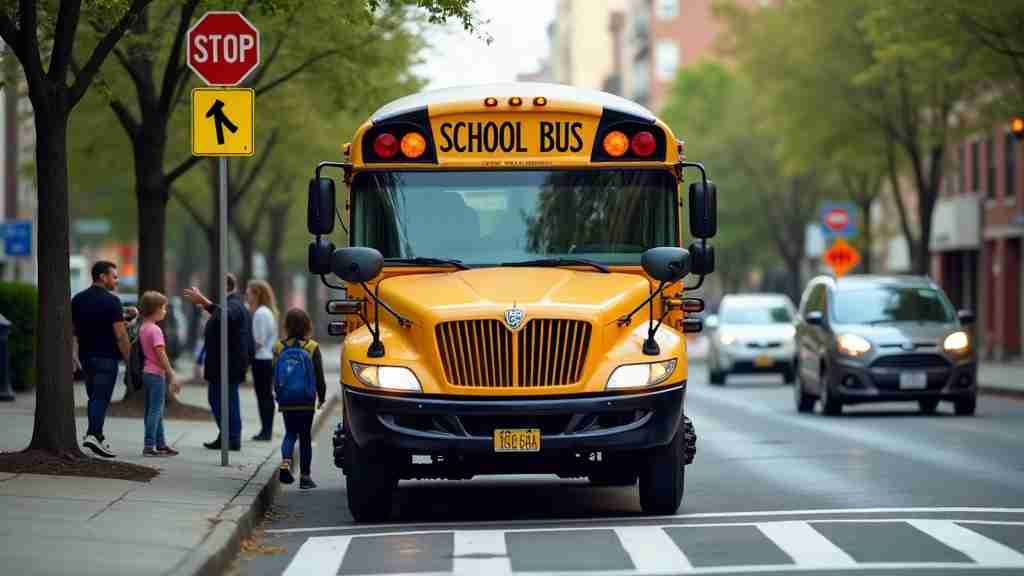
National estimates put school bus accidents at roughly thousands of crashes per year across the country, with federal data from the National Highway Traffic Safety Administration consistently showing several hundred fatal crashes involving school transportation vehicles annually, alongside many thousands of non-fatal collisions involving injuries ranging from minor bruises to catastrophic trauma. That volume matters in Brooklyn because not every one of those buses is operated the same way — and who operates the bus changes almost everything about how a injury claim unfolds.
A crash involving a Metropolitan Transportation Authority (MTA) bus follows a very different legal path than one involving a private charter company, a contracted school bus operator, or a tour bus. The differences affect who you can sue, how fast you must act, what insurance applies, and how much evidence survives before it disappears. Understanding these distinctions early can make or break a claim.
How Many School Bus Accidents Happen Each Year, and Why the Number Matters
Federal transportation safety data has tracked school bus-related crashes for decades, and the pattern is fairly consistent: several hundred people die in school transportation-related crashes nationally each year, and tens of thousands of non-fatal crashes occur involving school buses, vans, and the vehicles around them. Most of those fatalities are not the bus occupants themselves but pedestrians, bicyclists, and occupants of other vehicles.
In a dense urban environment like Brooklyn, those national numbers translate into real, local risk. Narrow streets, double-parked cars, heavy pedestrian traffic near schools, and congested intersections all increase the odds of a bus-related collision during pickup and drop-off windows.
- Most school bus crashes occur during morning and afternoon transport hours, when traffic and pedestrian activity peak near schools.
- Children are more frequently injured outside the bus — crossing the street, boarding, or exiting — than while seated inside it.
- Large vehicle blind spots around school buses contribute heavily to pedestrian and cyclist injuries.
- Non-fatal injury crashes vastly outnumber fatal ones, meaning most families dealing with a school bus accident are navigating injury claims, not wrongful death cases.
These figures explain why so many families in Brooklyn eventually need a bus accidents lawyer — the frequency of these crashes is high enough that most of what happens afterward follows predictable, well-worn legal patterns, even though each case has its own facts.
MTA Bus Accidents: A Government Claim With Strict Rules
When the bus involved is operated by the MTA or New York City Transit, the claim is against a government entity. That status triggers procedural requirements that don’t apply to ordinary negligence claims against private companies.
- Notice of Claim deadline: Claims against the MTA generally must be preceded by a formal Notice of Claim filed within 90 days of the incident — far shorter than the standard personal injury statute of limitations.
- Statute of limitations: Lawsuits against public authorities typically must be commenced within one year and 90 days, shorter than the three years generally allowed for private negligence claims in New York.
- Government investigation process: The MTA often conducts its own internal review, and claimants may be required to appear for a statutory hearing (sometimes called a 50-h hearing) before filing suit.
- Sovereign-style defenses: Public entities sometimes raise procedural defenses unavailable to private defendants, making strict compliance with filing rules essential.
Missing the 90-day notice window in an MTA case can permanently bar an otherwise valid claim, regardless of how serious the injuries are. This is one of the most important reasons to consult a bus accidents attorney quickly rather than waiting to see how injuries progress.
Private Charter and Contracted Bus Companies: A Different Legal Framework
Private charter companies, school bus contractors, and tour operators are not government entities, so the short notice-of-claim deadlines don’t apply. Instead, these cases are treated more like standard commercial negligence claims, generally subject to New York’s regular personal injury statute of limitations.
That said, private operator cases bring their own complications:
- Multiple potentially liable parties: The bus company, the driver, a leasing company that owns the vehicle, a school district that contracted the service, and even a maintenance contractor could all share responsibility.
- Commercial insurance layers: Private carriers often carry commercial policies with different coverage limits and claims-handling practices than a government self-insurance program.
- Contractual indemnification clauses: Agreements between a school district and a private bus contractor sometimes shift liability in ways that aren’t obvious without reviewing the contract.
- Corporate structure complexity: Some charter operators use holding companies or subsidiaries, which can complicate identifying the correct defendant.
Private company cases often move faster procedurally since there’s no government notice requirement, but they can require more investigative work to untangle which company — or companies — actually bear responsibility.
Comparing MTA and Private Charter Bus Claims
| Factor | MTA Bus Accident | Private Charter / Contracted Bus Accident |
|---|---|---|
| Notice requirement | Notice of Claim typically due within 90 days | No special notice requirement |
| Filing deadline | Generally 1 year and 90 days | Generally 3 years for standard negligence |
| Defendant type | Public authority | Private company, possibly multiple entities |
| Insurance structure | Government self-insurance / municipal claims process | Commercial auto/liability insurance policies |
| Pre-suit hearing | Statutory examination (50-h hearing) often required | Not typically required |
| Liability complexity | Usually one responsible entity | Potentially several (operator, owner, contractor, school district) |
Why Evidence Collection Looks Different in Each Case Type
MTA buses are typically equipped with onboard cameras and GPS tracking that feed into a centralized system, which can be a major advantage — if the footage is requested before it’s overwritten. Many transit systems only retain footage for a limited period, making a prompt records request critical.
Private charter and contracted buses vary enormously in their technology. Some smaller operators have minimal camera coverage, inconsistent maintenance logs, or driver qualification files that are harder to obtain without formal legal process.
- Request preservation of surveillance and dash-cam footage immediately in both case types.
- Identify the actual registered owner of a private charter bus, which may differ from the company whose name is painted on the vehicle.
- Obtain driver qualification files, which can reveal licensing issues or prior safety violations for private operators.
- Secure maintenance and inspection records, since private contractors are sometimes less rigorously regulated than MTA fleets.
School Bus Accidents Specifically: Added Layers
School bus accidents sit at the intersection of these two frameworks because school districts sometimes operate their own buses directly and sometimes contract the work out to private companies. Determining which applies is often the first step in any school bus claim.
- If a public school district directly employs the driver and owns the bus, government notice-of-claim rules likely apply.
- If the district contracts with a private busing company, the claim may proceed under standard private negligence rules — but the district itself might still bear some liability depending on the contract and level of oversight.
- Children injured while boarding, exiting, or crossing near a bus raise separate questions about driver visibility, stop-arm violations, and whether other motorists illegally passed a stopped bus.
Because the volume of school bus accidents nationally remains significant year after year, families facing one of these cases in Brooklyn are rarely dealing with a novel situation — but they are often dealing with an unfamiliar one, since most people never need to learn these distinctions until they’re living through them. A dedicated bus accidents lawyer can quickly identify which framework applies and what deadlines are already running.
Injuries Commonly Seen in Bus Accident Cases
Bus accidents — whether MTA, charter, or school-related — tend to produce a distinct injury profile because of vehicle size, seating design, and the number of people typically affected at once.
- Head and traumatic brain injuries from sudden stops or impacts, even at low speeds.
- Spinal cord injuries from the force of a collision or from being thrown from a seat.
- Fractures and soft tissue injuries, especially among standing passengers without seatbelts.
- Severe injuries to pedestrians or cyclists struck by a turning or merging bus.
Cases involving the most serious outcomes — including traumatic brain injuries or spinal cord injuries — require especially careful documentation of long-term medical needs, since the difference between an MTA defendant and a private insurer can affect how a settlement is structured and funded.
What to Do After a Bus Accident, Regardless of Operator
- Seek medical attention immediately, even if injuries seem minor at first.
- Note the bus number, route, and operator name if visible — this helps identify whether it’s a public or private vehicle.
- Photograph the scene, vehicle damage, and any visible injuries.
- Get contact information from witnesses, since bus accidents often involve many passengers who disperse quickly.
- Avoid giving recorded statements to any insurance adjuster — public or private — before understanding your rights.
- Contact a lawyer promptly, given how short the MTA notice window can be.
Determining operator status should happen as early as possible, since it dictates nearly every deadline that follows.
Moving Forward After a Bus Accident
Whether a crash involved an MTA bus, a private charter company, or a contracted school bus, the path to fair compensation depends on correctly identifying the responsible parties and acting within the applicable deadlines. These distinctions aren’t minor technicalities — they can determine whether a claim is even allowed to proceed. If you or a family member has been hurt in a bus-related crash in Brooklyn, the team at Ikhilov & Associates can help sort through the operator type, insurance structure, and filing deadlines that apply to your situation. You can review more about our approach on our practice areas page, read about outcomes on our case results page, or find us directly through our Google Business Profile. Reaching out early, before evidence disappears and deadlines pass, is one of the most useful steps you can take for your case.

Keep reading
More from the blog

How to Prevent Workplace Injuries: Why RSI Claims Get Denied in Brooklyn
Learn how to prevent workplace injuries like carpal tunnel and back strain, and why repetitive stress claims are…
Read more
Why Scaffold Law Cases Differ From Standard Construction Injury Claims
A construction accidents lawyer chicago il searchers trust explains why Scaffold Law claims differ from standard construction injury…
Read more
What Are the Main Causes of Pedestrian Accidents in Brooklyn?
What are the main causes of pedestrian accidents in Brooklyn? Learn why left-turn collisions, distracted driving, and poor…
Read moreTalk to a lawyer about your case
A case review costs nothing and puts you under no obligation. We work on a contingency fee, so there is no fee unless we recover compensation for you.