
Who Is Liable When a Lyft Driver Hits a Pedestrian in Brooklyn
Published:
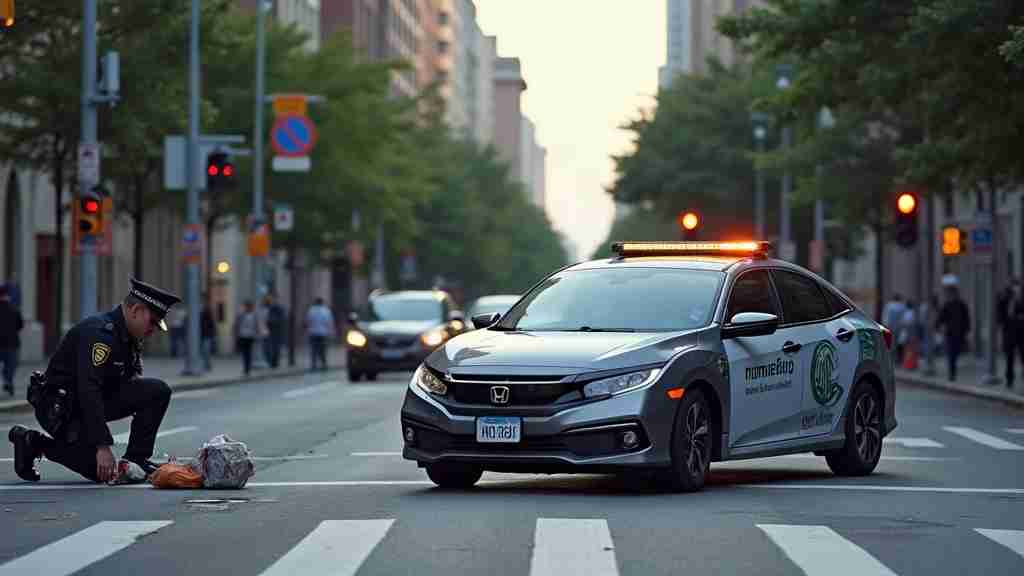
When a Lyft driver strikes a pedestrian in Brooklyn, liability typically falls on one or more of these parties: the Lyft driver personally, Lyft’s commercial insurance policy (depending on the app’s status at the time of the crash), or another negligent driver who contributed to the collision. Which party — or combination of parties — actually pays depends heavily on what the Lyft app showed on the driver’s phone the moment the pedestrian was struck. That single detail can shift a claim from a modest personal auto policy to a much larger commercial insurance program.
Pedestrian crashes involving rideshare vehicles have become a recurring issue on Brooklyn’s crowded streets, where Lyft and Uber drivers constantly pick up and drop off passengers mid-block, double-park near crosswalks, and make sudden turns while watching the app instead of the road. Understanding how liability actually works is the first step toward getting fairly compensated after one of these crashes.
Why Lyft Pedestrian Cases Are More Complicated Than Ordinary Car Accidents
In a standard pedestrian accident, the question is usually straightforward: was the driver negligent, and if so, their personal auto insurance responds. Lyft crashes add a layer of complexity because Lyft drivers use personal vehicles but are engaged in commercial activity through the app. New York requires rideshare companies to carry specific layers of insurance that only apply during certain phases of a trip.
This means two nearly identical pedestrian accidents — one where the driver was logged into the app and one where they weren’t — can have completely different insurance outcomes. Figuring out which “period” applied at the time of impact is often the single most important factor in a Lyft pedestrian claim.
The Three App Periods That Determine Coverage
New York’s rideshare insurance framework, along with Lyft’s own policies, generally breaks a driver’s app status into these stages:
- App off: The driver is not logged into Lyft at all. Only the driver’s personal auto policy applies, just as with any other private vehicle.
- App on, waiting for a ride request: The driver is logged in but hasn’t accepted a trip. Lyft provides limited contingent liability coverage that supplements the driver’s personal policy if it’s insufficient or denies the claim.
- En route to pick up or during a trip: Once a ride is accepted, Lyft’s commercial policy — generally offering much higher liability limits — becomes the primary coverage.
For a pedestrian hit while a Lyft driver was actively en route to a passenger or transporting one, this third category typically applies, which means significantly more coverage is potentially available than a standard personal auto policy would provide.
Who Can Be Held Liable When a Lyft Driver Hits a Pedestrian
Liability doesn’t always rest with just the driver. Depending on the facts, a Brooklyn pedestrian accident claim may involve several responsible parties.
The Lyft Driver
Most claims start here. If the driver ran a red light, failed to yield at a crosswalk, was distracted by the app’s navigation, or was speeding to complete a trip faster, that driver’s negligence is the foundation of the claim. Their conduct — and their app status at the time — determines which insurance policy responds.
Lyft’s Insurance Coverage
Lyft itself is rarely sued directly as an employer, since rideshare drivers are classified as independent contractors rather than employees. Instead, the claim targets the insurance policy Lyft is required to maintain for trips in progress. This is an important distinction: the case is less “Lyft is liable” and more “Lyft’s insurance policy is the applicable coverage” for that phase of the trip.
A Third-Party Driver
Sometimes another vehicle contributes to the crash — for example, a car that cut off the Lyft driver and forced an evasive maneuver into a crosswalk. In these situations, liability may be shared between the Lyft driver and the third party, and both insurance policies could be implicated.
The City or a Property Owner
Occasionally, a dangerous intersection, malfunctioning traffic signal, poor sidewalk design, or obstructed crosswalk visibility plays a role. These cases can bring in municipal liability or premises liability claims against a property owner whose landscaping or construction blocked a driver’s or pedestrian’s view, which raises separate legal procedures, including shorter notice deadlines when a city entity is involved.
What Brooklyn Pedestrians Should Know About New York’s No-Fault System
New York is a no-fault state for car insurance, but pedestrians struck by vehicles are generally entitled to seek no-fault benefits too, covering medical bills and a portion of lost wages regardless of who caused the crash. This applies whether the striking vehicle was a Lyft, a personal car, or a commercial vehicle.
However, no-fault benefits don’t cover pain and suffering, and they’re often insufficient for serious injuries. When a pedestrian suffers a fracture, head injury, or other significant harm, New York law allows a separate claim against the at-fault driver (or the applicable rideshare insurance) for damages beyond what no-fault covers.
| Insurance Layer | When It Applies | What It Typically Covers |
|---|---|---|
| Driver’s personal auto policy | App completely off | Standard personal liability limits |
| Lyft contingent coverage | App on, no trip accepted yet | Supplemental coverage if personal policy is inadequate |
| Lyft commercial policy | En route to pickup or during trip | Higher commercial liability limits |
Common Scenarios Behind Brooklyn Lyft-Pedestrian Crashes
Certain patterns show up again and again in these cases, particularly in dense neighborhoods with heavy foot traffic:
- A driver stopping abruptly or double-parking to pick up a passenger, then pulling back into traffic without checking for pedestrians.
- A right or left turn made while the driver is glancing at the app’s turn-by-turn directions instead of the crosswalk.
- A driver circling the block searching for a pickup address and failing to notice someone crossing mid-block.
- Drop-offs near busy intersections where passengers exit directly into a travel lane or bike lane, creating a secondary hazard.
- Drivers rushing between trips to maximize earnings, leading to rolling stops at crosswalks and stop signs.
Brooklyn’s commercial corridors, nightlife districts, and areas near transit hubs see a disproportionate share of these incidents simply due to rideshare pickup density and pedestrian volume.
Steps to Take After Being Hit by a Lyft Vehicle
What happens in the hours and days after the crash can significantly affect the strength of a claim.
- Call 911 and get medical attention even if injuries seem minor at first — adrenaline often masks pain from impact injuries.
- Request a police report and make sure the responding officer notes that the striking vehicle was a rideshare car.
- Photograph the scene, including the vehicle, any visible Lyft branding or illuminated app, the crosswalk or roadway, and your injuries.
- Get the driver’s information, including their name, license plate, and confirmation of whether they were logged into the Lyft app at the time.
- Avoid giving a recorded statement to Lyft’s insurer or the driver’s personal insurer before speaking with legal counsel, since early statements can be used to minimize your claim.
- Preserve the Lyft receipt or ride details if you were a passenger in a different vehicle or witnessed the trip status on a nearby phone.
Why These Claims Often Require Legal Support
Rideshare companies and their insurers are well-practiced at disputing app status, arguing a driver was between rides rather than en route, or shifting blame onto the pedestrian’s crossing behavior. Proving which insurance layer applies often requires subpoenaing Lyft’s trip data, something an individual pedestrian typically cannot do alone.
A pedestrian pursuing a claim also has to contend with comparative negligence arguments — insurers frequently claim the pedestrian was jaywalking, crossing against a signal, or otherwise partly at fault to reduce the payout. New York’s comparative negligence rule allows recovery even when a pedestrian shares some fault, but the percentage assigned directly affects the final settlement amount.
Given these layers — driver negligence, shifting insurance coverage, app data, and comparative fault arguments — pedestrians hit by Lyft vehicles in Brooklyn benefit from having someone review the trip details and insurance structure early, before statements are locked in or evidence disappears. The firm’s rideshare accidents practice focuses specifically on untangling these multi-layered claims, and the related pedestrian accidents work addresses the comparative fault and crosswalk-liability issues that frequently arise in these cases.
What Compensation Can Cover
Depending on the severity of the injury, a successful pedestrian claim against a Lyft driver or the applicable rideshare insurance may address:
- Emergency and ongoing medical treatment, including surgery, physical therapy, and rehabilitation.
- Lost income during recovery, and diminished earning capacity for long-term injuries.
- Pain and suffering tied to the physical and emotional toll of the crash.
- Future care costs for injuries involving fractures, traumatic brain injury, or other lasting impairment.
Severe pedestrian-vehicle collisions can result in catastrophic outcomes, and cases involving serious head trauma or permanent impairment are handled with particular attention to long-term medical needs and life-care planning.
If you or someone you know was struck by a Lyft driver in Brooklyn, it’s worth having the details of the crash — including the driver’s app status and any available trip information — reviewed before accepting an insurance settlement. Ikhilov & Associates can be reached through the firm’s contact page to go over what happened and discuss realistic next steps, and you can also find the office on Google Maps for directions or reviews. Getting informed early, even before deciding on anything, puts you in a stronger position to protect your claim down the road.

Keep reading
More from the blog
Why Platform Gap and Door Closure Injuries Raise Unique Liability Questions on NYC Subways
Platform gap and door closure injuries on NYC subways involve unique liability rules. Learn what makes these claims…
Read more
What Is Premises Liability? Negligent Security vs. Slip and Fall in Brooklyn
What is premises liability, and how do negligent security claims differ from slip and fall cases in Brooklyn?…
Read more
How to Prevent Workplace Injuries: Why RSI Claims Get Denied in Brooklyn
Learn how to prevent workplace injuries like carpal tunnel and back strain, and why repetitive stress claims are…
Read moreTalk to a lawyer about your case
A case review costs nothing and puts you under no obligation. We work on a contingency fee, so there is no fee unless we recover compensation for you.